Menu
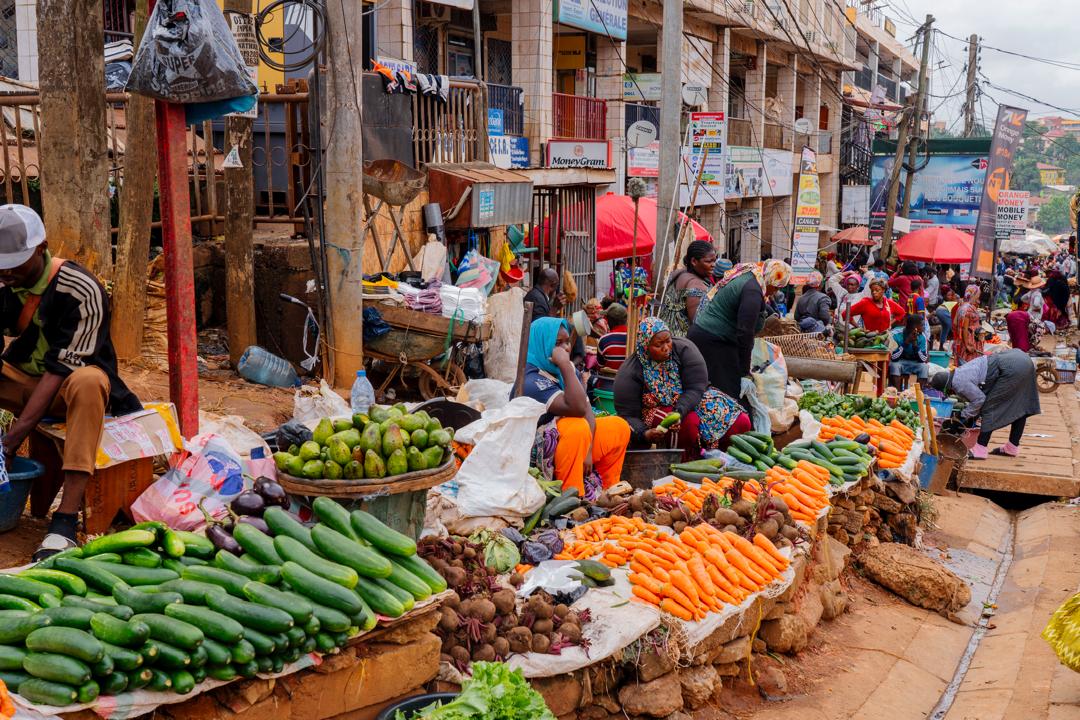
The informal sector occupies an absolutely central place in the functioning of African cities. In many metropolitan areas across the continent, it is neither a marginal phenomenon nor a temporary reality; rather, it represents one of the main economic and social structures that enable the city to function on a daily basis.
Among the major actors of this popular economy are the “bayam sellam.” This expression, derived from Cameroonian Pidgin English — “buy am” (“buy it”) and “sell am” (“sell it”) — refers to a broad category of small-scale traders who play a significant role in Cameroon’s urban economy.
The majority of bayam sellam are women. Beyond their commercial activity, they have come to embody a true cultural figure in Cameroon, symbolizing resourcefulness, resilience, and grassroots entrepreneurship. In everyday language, it is common to hear expressions such as: “The bayam sellam keep the markets alive,” or “She is a bayam sellam at the Central Market.”
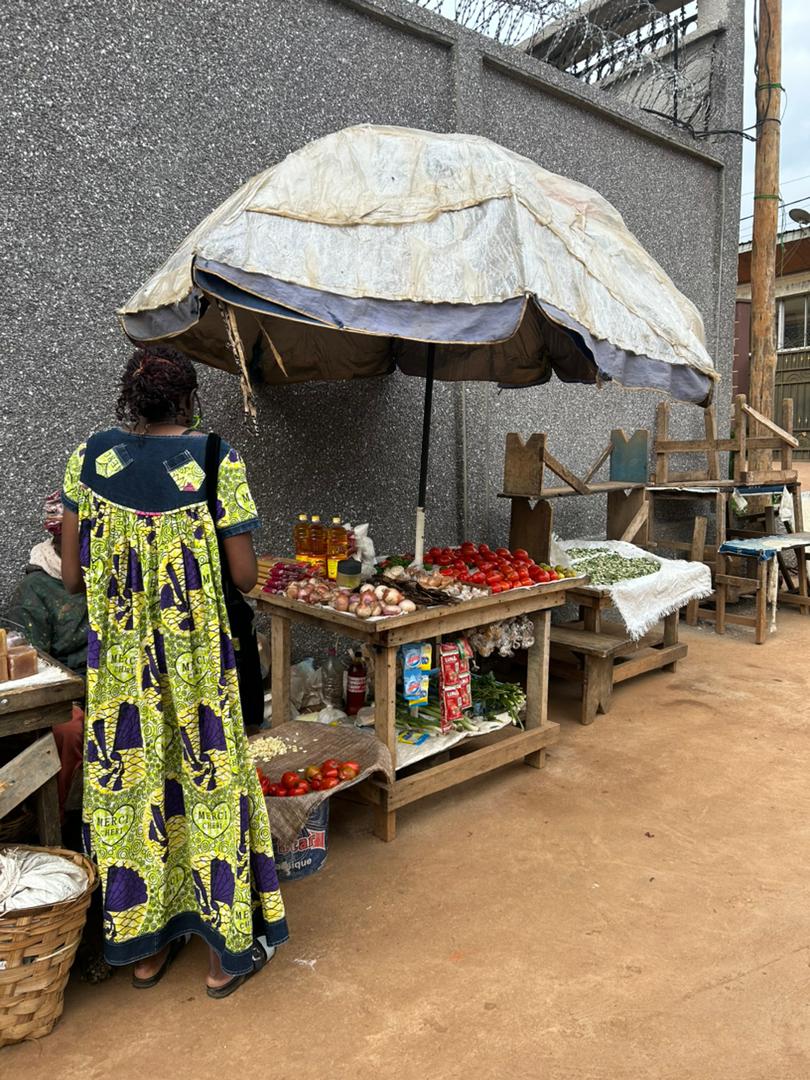
In reality, bayam sellam generate a large part of everyday urban life. Yet they often work in spaces that were never designed for them: overcrowded sidewalks, precarious markets, improvised shelters, and a lack of water, sanitation, storage, or security. This situation leads to an informal occupation of public space that reveals both the shortcomings of African cities and the remarkable adaptability of grassroots economies.
Bayam sellam occupy transitional spaces, transform streets, create urban micro-centralities, and reinvent public space on a daily basis. Their presence highlights the gap between official urban planning and the actual ways in which the city is used.
Around the world, street vendors have been the subject of extensive urban and architectural research because of their decisive role in shaping contemporary cities. The condition of the bayam sellam therefore constitutes a particularly relevant subject for architects, as it simultaneously touches on issues of public space, informal economies, urban mobility, health, gender, climate resilience, and social justice.
Architecture, indeed, is concerned with the ways in which people inhabit and use space, with flows, infrastructures, everyday practices, and the conditions of dignity, comfort, and safety. From this perspective, the challenge is not merely to build markets, but to design spaces capable of supporting existing urban practices while improving the living and working conditions of their users.
It is in response to this issue that our student Amira Bikouth explored the condition of the bayam sellam of the Central Market as part of her Final Year Project, brilliantly defended during the latest Master’s thesis defense session on February 20, 2026.
To the question:
“How can architecture improve the working conditions of bayam sellam without destroying the social and economic dynamics of Cameroonian popular markets?”
she answers through the project Bayam Sellam Hub.

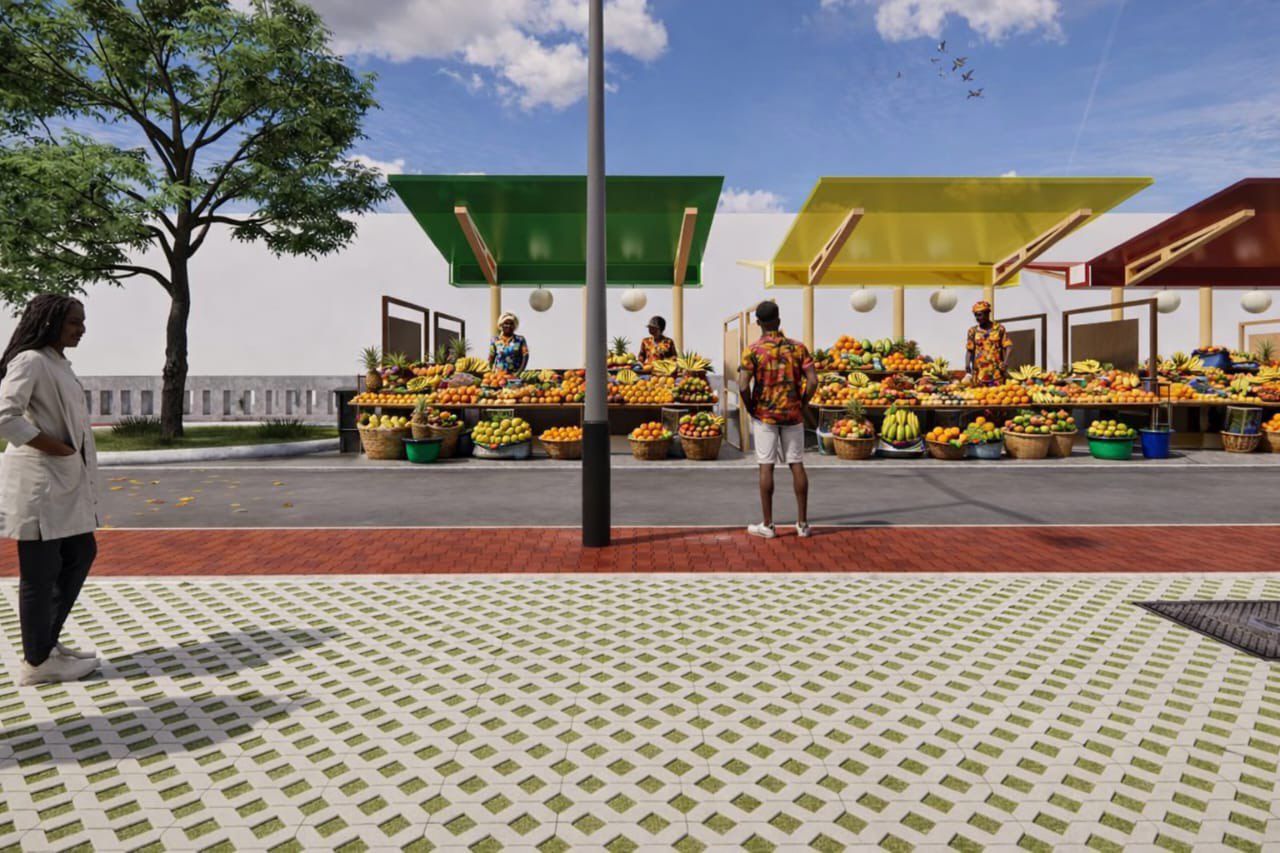
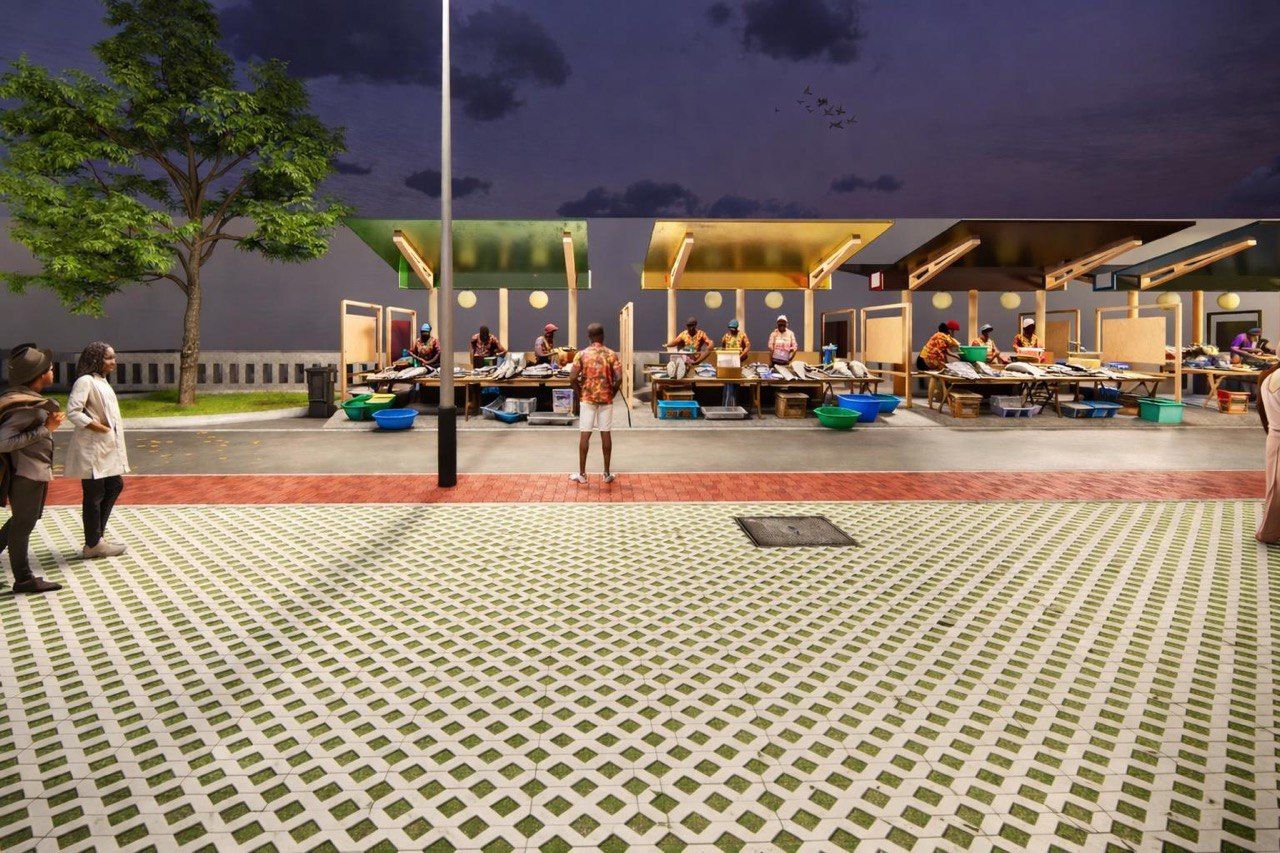
The project proposes, along the commercial street, mobile stalls combined with adapted urban furniture, covered structures, and solar-powered facilities. At the end of this axis unfolds an eco-responsible building entirely dedicated to bayam sellam, integrating a market hall, storage and preservation spaces, workshops, a microfinance service, a childcare center, sanitary facilities, and security systems.
Conceived as both a social and economic infrastructure, the building opens onto a public square designed as a space for meeting, exchange, and urban breathing. Through this proposal, the project demonstrates that architecture can become a tool for supporting and enhancing grassroots economies while contributing to a more inclusive, resilient, and humane city.